Planning a used car purchase in Jackson, KY? This local market research guide gives you practical pricing benchmarks, availability signals, and model demand patterns across Breathitt County. Learn how to compare listings, weigh mileage versus age, spot four wheel drive premiums that matter for Eastern Kentucky terrain, and time your search for seasonal savings. Start by browsing used-inventory to set your budget and check sold-inventory to see what moves fast. Use our steps to estimate a fair offer before you visit the lot and to prepare a short list of vehicles that fit daily driving on KY 15, school runs, and mountain back roads. Whether you are eyeing a fuel saving compact, a family SUV, or a work ready truck, this page helps you shop with confidence using data guided best practices tailored to Jackson, KY.
Keep learning with detailed tips in our blog, check store policies in visitor-agreement and privacy-policy, and read our story at about-us. Questions about inventory, research steps, or title paperwork in Kentucky can be sent through contact-us. Use this page as your local playbook to compare options and set realistic expectations for Jackson area pricing.
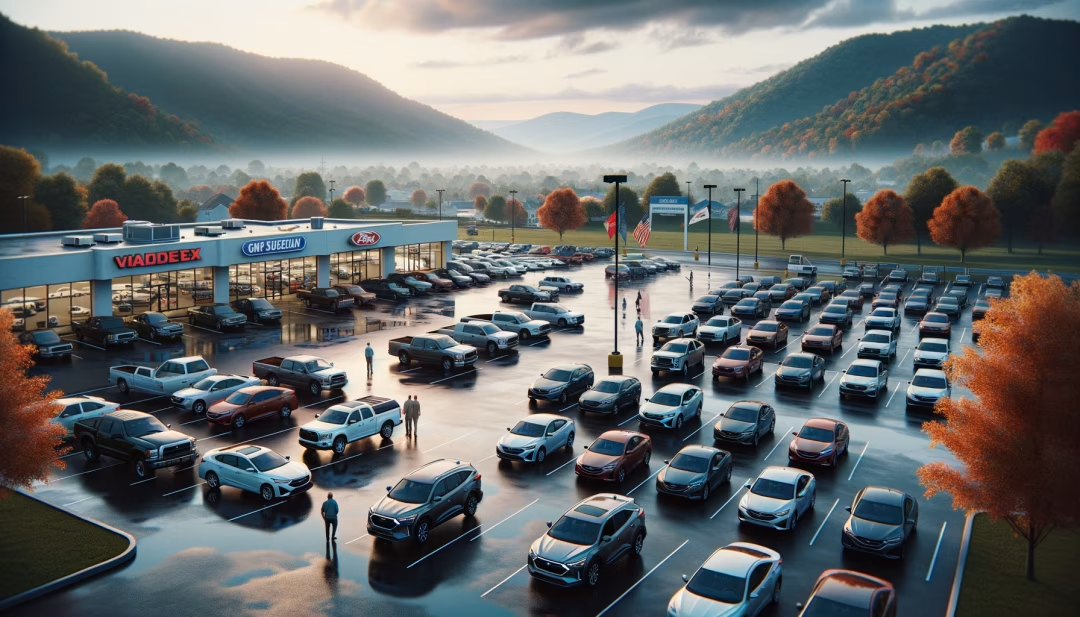
Jackson sits in the heart of Eastern Kentucky, where hills, variable weather, and a mix of highway and rural roads shape real demand. That local context influences what sells quickly and how vehicles are priced. All wheel drive and four wheel drive SUVs and trucks often carry a premium versus front wheel drive sedans, especially in colder months. Low total cost commuters with strong fuel economy are also popular for KY 15 and regional travel. Understanding these patterns helps you estimate a fair range before you make an offer.
You can build a reliable fair value range with three layers: comparable listings, vehicle condition, and local demand. First, gather five to ten comparable units with the same model year, trim, drivetrain, and options. Next, normalize those comps for mileage by adding or subtracting a small amount per 1,000 miles compared with the average you found. Finally, nudge the figure for condition and local demand. For example, a well documented maintenance history or brand new tires may justify a modest premium, while noticeable wear or missing keys may support a discount.
Do not evaluate mileage alone. A 9 year old SUV with 95,000 miles and full records can be more reliable than a 6 year old unit with 75,000 miles but spotty maintenance. Use a simple grading: Excellent, Good, Fair, or Needs Work. Excellent means documented service, clean title, matching tires, and no warning lights. Good might include light cosmetic wear. Fair often includes moderate cosmetic issues or upcoming maintenance like brakes or tires. Needs Work indicates immediate repairs.
Seasonality matters. In Eastern Kentucky, AWD and 4WD premiums can rise before the first sustained cold snap. Tax time often brings more retail demand and slightly firmer prices. Late summer may create opportunities on family SUVs if new model introductions nudge trade ins. Watch days on lot trends in used-inventory and price reductions over 14 to 30 days to time your visit.
Two of the most revealing pages are your local used-inventory and recently sold-inventory. If a model appears in used-inventory then disappears within a week, that is a hot mover. If it lingers for 30 days with two or more price drops, you likely have more negotiation room. Note which trims sell fastest. Highly optioned packages or rare color and package combinations can sell faster even at a higher price.
Before you lock in a vehicle, build a payment plan that fits your budget. If you shop across counties, you can study lender tips in pages like used-car-financing-laurel-ky, used-car-financing-pulaski-ky, and used-car-financing-madison-ky. If your credit file is still rebuilding, browse guidance in second-chance-auto-financing-madison-ky or second-chance-auto-financing-laurel-ky. Bring proof of income, residence, and insurance to speed up approvals and keep your rate options open.
Knowing your trade value helps you see the full deal. Photograph your current vehicle in daylight, capture tire tread with a coin test, and list maintenance you have completed in the last 12 months. Gather at least three trade estimates from nearby dealers and online tools. Use the median as your target and adjust for reconditioning if the buyer will need brakes, tires, or body work.
Local roads and elevation changes put load on brakes, suspensions, and cooling systems. A careful inspection reduces surprises after purchase. If possible, have a trusted technician complete a pre purchase inspection.
Use triangulation for better accuracy. Combine comp prices from at least two online marketplaces, local dealer listings like our used-inventory, and historical sales clues from sold-inventory. Cross check these with condition notes from your inspection and any warranties or service contracts offered. When your estimate and the asking price are within a few hundred dollars, focus your conversation on condition, service, and documentation rather than pure price.
If you are open to shopping a wider radius, compare demand and pricing across nearby counties. Differences in trim availability, days on lot, and buyer preferences can create opportunities. Use the pages below to understand local dynamics.
Use these resources to plan, research, and finalize a purchase with clarity.
Set your budget, scan local supply, and focus on condition. Use our inventory pages to observe days on lot and price changes. Build a fair range from five to ten comps, adjust for mileage and condition, and account for local demand, especially when shopping AWD or 4WD. Prepare financing documents early to keep rate options open, and document your trade to protect its value. With this approach, your first choice in Jackson is far more likely to be the right choice for the miles ahead.